Breast milk storage bags are pre-sterilized, single-use pouches made from food-grade laminated film, engineered to freeze, store, warm, and feed expressed milk without transfer. For maternal-care brands, they’re one of the highest-repeat-purchase products in the category — which makes the manufacturing spec (film safety, seal strength, sterilization) a direct brand-risk decision. This guide covers structures, standards, and private-label ordering from the factory side.
Table of Contents
– Why the Category Keeps Growing
– Film Structure: What Safe Milk Bags Are Made Of
– The Standards That Matter (FDA, LFGB, EN 14350)
– Design Features That Mothers Actually Judge
– Quality Control: Leak & Sterility Testing
– Private Label: MOQ, Customization & Timeline
– FAQ
Why the Category Keeps Growing
Breast milk storage bags sit at the intersection of three durable trends: returning-to-work motherhood, freezer-stash culture, and hospital-grade pumping at home. Usage is measured in dozens of bags per week per mother, brands differentiate on safety documentation and design details, and regulatory attention is increasing — meaning the gap between compliant factories and commodity resellers is widening. Brands that can document film safety and seal reliability are winning listings against those that just import.
Film Structure: What Safe Milk Bags Are Made Of
A quality milk storage bag is a 3-layer food-grade laminate with no ink contact with milk:
| Layer | Material | Function |
|---|---|---|
| Outer | PET or NY | Print carrier (all printing on the outside) |
| Middle | AL foil or high-barrier PE | Oxygen/moisture/light barrier for freezer storage |
| Inner | Food-grade LLDPE/CPP | Milk-contact layer — virgin resin, no additives |
Non-negotiables buyers should verify:
- Inner layer is virgin, food-contact-certified LLDPE compliant with FDA 21 CFR 177.1520 and EU 10/2011 (or LFGB for Germany’s stricter sensibility)
- Zero ink or adhesive contact with milk — printing only on the outer layer
- BPA-free, phthalate-free by construction — no PVC anywhere
- Pre-sterilized bags sealed at production (gamma or UV sterilization of film; bags stay sealed until use)
The Standards That Matter
- FDA 21 CFR 177.1520 / EU 10/2011: baseline food-contact compliance for the milk-contact layer
- EN 14350: child use and care articles — drinking equipment requirements (relevant for the feeding-side claims in EU markets)
- LFGB: German food-contact law, commonly required by EU retailers as the stricter benchmark
- ISO 9001 factory quality system; ISO 13485-adjacent practices for brands positioning medical-grade
Request the certificates for the film lot, not just the factory — and re-request annually; expired certificates are the most common compliance gap we see in category audits.
Design Features That Mothers Actually Judge
- Double zipper seals — the #1 leak complaint driver; dual tracks above and below the fill zone.
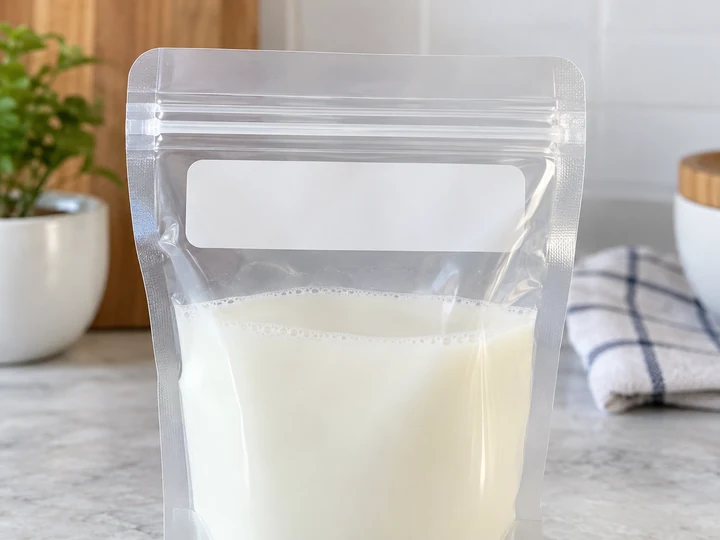
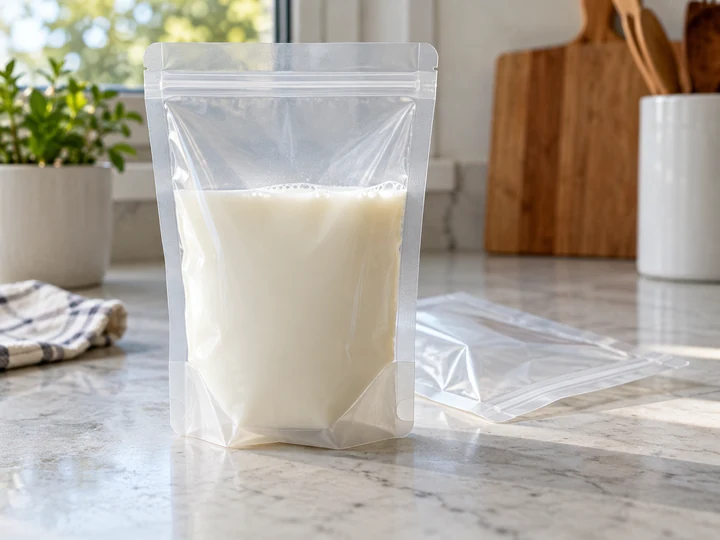
- Standing base — self-standing bags pump, freeze, and thaw hands-free; the format has become the retail default.
- Thermal sensor strip — color indicator confirming milk is warmed to body temperature, not overheated.
- Easy-pour corner spout — tear-and-pour corners that don’t dribble.
- Write-on label zone — date/volume fields that accept pen without smearing in the freezer.
- Volume graduations — accurate to ±5 ml at the fill line.
Sizes: 50 ml, 100 ml, 150 ml, 180 ml, 200 ml, 250 ml are the standard ladder; 5–6 oz (150–180 ml) is the volume SKU.
Quality Control: Leak & Sterility Testing
Milk bags fail in freezers and diaper bags — QC must simulate both:
- Seal strength testing on every batch (peel force within spec)
- Leak testing: filled bags pressure-tested and dropped at freezer temperature
- Sterility: bioburden testing pre-shipment; bags sealed in sterile, food-grade outer packaging
- Freezer-cycle conditioning: film flexed at -20°C to verify no cracking at the gusset
- Batch traceability codes on every case
Our production supplies brands in North America, Europe, and Australia with per-batch test documentation.
Private Label: MOQ, Customization & Timeline
| Item | Standard |
|---|---|
| MOQ | 5,000 pcs per design |
| Customization | Size, film structure, printing, zipper spec, sensor strip, carton |
| Pre-production samples | Free (your artwork) |
| Lead time | 15–20 days after approval |
| Certificates provided | FDA/EU 10/2011 or LFGB film compliance, batch test reports |
Design guidance: category conventions (soft pastels, medical-clean whites, minimal ink coverage) convert better than loud graphics; heavier ink coverage also complicates recyclability claims.
The bag format generalizes: the same factory platform produces spout pouches for liquid nutrition and stand up pouches for the rest of a maternal-care line — most brands consolidate SKUs with one converter for consistency.
FAQ: Breast Milk Storage Bags
What are breast milk storage bags made of?
Food-grade 3-layer laminate: PET or nylon outer (print), foil or high-barrier PE middle, and virgin food-contact LLDPE inner that touches milk. The inner layer complies with FDA 21 CFR 177.1520 and EU 10/2011, is BPA- and phthalate-free, and no ink touches the milk side.
Are breast milk storage bags sterile?
Quality bags are pre-sterilized at production and remain sealed in sterile outer packaging until first use – mothers should not re-sterilize single-use bags, as reheating the film degrades seal integrity.
Can breast milk storage bags be reused?
No – they are designed as single-use for safety: repeated freezing/warming cycles and washing degrade the zipper seals and film. Reuse risks leaks and bacterial contamination in milk residue.
How much milk fits in a standard storage bag?
The standard size ladder is 50-250 ml, with 150-180 ml (5-6 oz) as the volume SKU. Bags should never be filled beyond the marked max line – frozen milk expands about 10%.
What should brands verify before private-labeling milk bags?
Film food-contact certificates (FDA/EU 10/2011 or LFGB) for the actual lot, double-zipper seal and leak test reports, freezer-cycle film conditioning, and batch traceability. These four documents separate compliant factories from commodity resellers.
What is the MOQ for private label breast milk storage bags?
5,000 pieces per design with free pre-production samples of your artwork; production takes 15-20 days after approval, with per-batch test documentation included.
Building a maternal-care line? Sea Faith Plastics Packing manufactures private-label breast milk storage bags with full food-contact documentation, double-zipper QC, and batch traceability. Request samples and certificates: Get a quote →
Related guides: Spout Pouch Packaging Guide · Stand Up Pouches Guide
By Sarah Chen, Export Sales Manager at Sea Faith Plastics Packing. Last updated: October 2026.