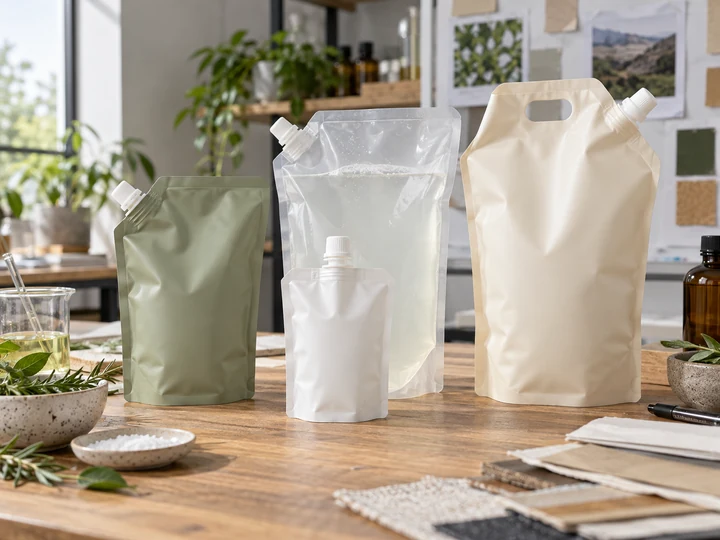
A recyclable spout pouch is a liquid pouch built from a single plastic family — typically PE/PE mono-material with a compatible spout — so the whole package can be processed in one recycling stream. It delivers the convenience of a spouted pouch while answering the #1 objection to flexible packaging: end-of-life. This guide explains how mono-material structures work, where they fit (and where they don’t), and what brands should verify before switching.
Table of Contents
– What Makes a Spout Pouch Recyclable?
– Mono-PE Structures: The Technical Baseline
– The Shelf-Life Trade-Off (Honest Version)
– [Regulation Is Forcing the Switch (EPR & PPWR)]#regulation)
– Where Recyclable Pouches Fit — and Where They Don’t
– What to Ask a Supplier Before Switching
– Cost: What Recyclability Adds
– FAQ
What Makes a Spout Pouch Recyclable?
Traditional spout pouches fail recycling because they laminate different plastics together — PET, aluminum, and PE can’t be separated economically, so the pouch is landfill-bound. A recyclable spout pouch solves this by building every layer from the same polymer family: PE film laminated to PE barrier film, with a PP or PE spout. One material stream, one recycling path.
Certification matters as much as construction. Ask suppliers for:
- Store drop-off / How2Recycle labeling compatibility (North America) — PE films are accepted at retail drop-off points even where curbside isn’t available
- GRS (Global Recycled Standard) if you’re using recycled content
- Written recyclability declaration naming the resin family
Mono-PE Structures: The Technical Baseline
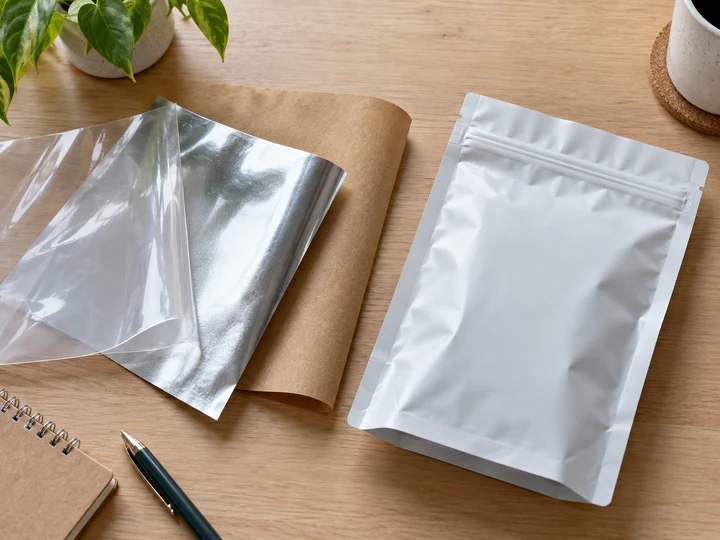
A typical recyclable spout pouch structure, layer by layer:
| Layer | Material | Function |
|---|---|---|
| Outer | Printed PE (or PE with EVOH barrier co-ex) | Print + stiffness |
| Barrier | High-barrier PE or EVOH core | Oxygen/moisture barrier |
| Inner | Food-grade PE sealant | Heat seal, product contact |
| Spout/cap | PP or PE mono-material | Must match stream |
Key technical points for buyers:
- EVOH-core mono-PE is the mainstream high-barrier route — it keeps a PE-dominant (>90%) composition that recycling streams accept while dramatically improving oxygen barrier vs. plain PE.
- All layers, inks, and adhesives must stay under the 5% non-PE threshold most recyclability protocols allow.
- Spout and cap should be PP or PE — aluminum or mixed-material closures break the stream.
The Shelf-Life Trade-Off (Honest Version)
A foil spout pouch blocks essentially 100% of oxygen; a mono-PE pouch with EVOH blocks enough for 4–9 months depending on product. That gap decides which products should switch:
| Product | Foil Shelf Life | Mono-PE Shelf Life | Verdict |
|---|---|---|---|
| Chilled juice, dairy drinks | 45–90 days chilled | 45–90 days chilled | ✅ Switch now — chilled distribution masks the gap |
| Ambient juice | 9–12 months | 4–6 months | ⚠️ Only if turnover is fast |
| Baby food purée | 12–24 months | 6–12 months | ⚠️ Case by case |
| Detergent, shampoo | 12–18 months | 9–12 months | ✅ Ideal — products are inherently stable |
| Wine | 12 months | Not recommended | ❌ Stay with foil |
The honest framing: recyclable pouches are not a downgrade — they’re a different tool. Match the structure to your actual turnover speed, not to a hypothetical worst case.
Regulation Is Forcing the Switch
Three regulatory waves are converting “nice to have” into “compliance requirement”:
- EU PPWR (Packaging & Packaging Waste Regulation): all packaging must be recyclable-by-design by 2030, with recyclability grades determining fees.
- US state EPR laws (California SB 54, Colorado, Oregon, Maine): producers pay fees scaled to packaging recyclability; non-recyclable formats become progressively more expensive.
- Retailer requirements: major chains increasingly require How2Recycle-labeled or store drop-off compatible formats as a listing condition.
Brands exporting to the EU or selling into US grocery should treat mono-material conversion as a 2026–2027 pipeline item, not a someday item.
Where Recyclable Pouches Fit — and Where They Don’t
Strong fit: detergents and refills, shampoo and body wash, chilled beverages, snacks, short-cycle ambient products, and any brand whose core promise is sustainability.
Weak fit: wine and long-shelf-life ambient juice (barrier limits), retort products (mono-PE retort is still maturing), and products with aggressive fill chemistries (solvents).
If your product sits in the weak-fit column, the interim strategy is downgauging: reducing total laminate weight in a conventional structure cuts plastic per unit while keeping the foil barrier — then convert to mono-material in the next generation.
What to Ask a Supplier Before Switching
- Exact mono-PE structure in writing, layer by layer with microns — “recyclable” alone is marketing, not a spec.
- Oxygen and water vapor transmission data for the finished laminate (OTR/WVTR), not just claims.
- >90% single-polymer composition documented, inks and adhesives included.
- Spout/cap resin family — PP or PE, with recyclability statement.
- Store drop-off / APR Design Guide compatibility statement for North America.
- Real shelf-life test data on the structure with a product similar to yours, not a datasheet for a different film.
- MOQ for the eco structure — ours matches standard pouches: 5,000 pcs per design.
See our standard spout pouch guide for the full specification framework, then apply the recyclability questions above.
Cost: What Recyclability Adds
Mono-PE spout pouches typically cost 10–25% more than conventional VMPET pouches of the same size, and run 10–20% above at the barrier-performance equivalent of foil lines. Prices are falling as EVOH-core PE films scale. Offset factors:
- Lighter total weight than foil structures (shipping and EPR-fee savings)
- EPR fee reduction under California SB 54 and PPWR (fees are recyclability-scaled)
- Brand equity: sustainability claims now drive purchase intent in >50% of US grocery categories
At MOQ 5,000 pcs, the absolute premium per pouch is small; the marketing and compliance returns compound.
FAQ: Recyclable Spout Pouches
What are recyclable spout pouches made of?
Mono-material PE/PE laminates — printed PE, high-barrier PE or EVOH-core PE, and food-grade PE sealant — with PP or PE spouts. Over 90% of the package by weight is a single polymer family, which is what makes it recyclable in film streams.
Are recyclable spout pouches suitable for food products?
Yes. Food-grade mono-PE sealant layers comply with FDA 21 CFR 177.1520 and EU 10/2011. They are widely used for chilled juice, dairy drinks, sauces, dry food, and refills. For long-shelf-life ambient products, verify barrier data against your required shelf life first.
Can recyclable pouches match foil barrier performance?
Not fully: EVOH-core mono-PE delivers roughly 4–9 month ambient shelf life versus 12+ for foil structures. For chilled distribution, fast-turnover products, and inherently stable liquids like detergents, the gap is irrelevant; for wine and long-life juice, foil remains the right choice.
How should consumers recycle spout pouches?
In North America, PE film pouches go to retail store drop-off collection points (labeled How2Recycle “store drop-off”), where they join plastic film recycling streams. Curbside acceptance is growing but not yet universal — check local program rules.
What is the MOQ and lead time for recyclable spout pouches?
Our MOQ is 5,000 pieces per design — identical to conventional pouches — with free pre-production samples. Lead time is 15–20 days after artwork approval. Request the recyclability documentation pack (structure, OTR/WVTR data, declarations) with your quote.
Do recyclable pouches cost more?
Typically 10–25% more than VMPET structures of the same size at current film prices, offset by lighter weight, lower EPR fees under regulations like California SB 54, and sustainability-driven brand value. The premium per pouch at MOQ is a few cents.
Planning a sustainability conversion? Sea Faith Plastics Packing supplies mono-material recyclable spout pouches with full documentation — structure sheets, transmission data, and food-contact certificates. Send your product and target shelf life for a structure recommendation and free samples: Request a quote →
Related guides: Spout Pouch Packaging: Complete Guide · Juice Pouch Bags: 2026 Guide
By Sarah Chen, Export Sales Manager at Sea Faith Plastics Packing. Last updated: October 2026.